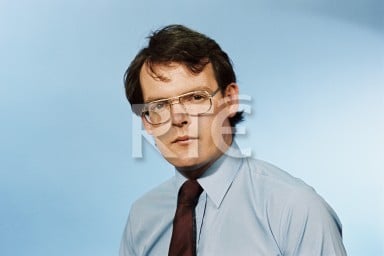
The death has occurred of a long-standing comrade and contributor to this magazine (Irish Political Review) Feargus O Raghallaigh.
| He died of a heart attack on 14th February 2023 at his home in Waikanae, New Zealand, aged 74. Formerly from Donegal (Dunfanaghy) and Dublin. He is mourned by Miriam and their daughters Holly and Kate, his siblings Rónán, Éirnín, Dairine, Ultan, Feilim, Tomás and Siún, extended family, and his many friends both in Ireland and New Zealand. Predeceased by his partner Trish and his parents Caitlín and Séamus. Funeral service will take place in Waikanae on the 7th March, 11am (New Zealand local time), or Monday, 6th March 9.50pm Irish time). The service can be viewed live online at https://view.oneroomstreaming.com/index.php?data=MTY3Njk5MDI0MjIzNzMzOSZvbmVyb29tLWFkbWluJmNvcHlfbGluaw== A memorial service will also take place in Dublin, on Sunday, 12th March at 3pm in the Unitarian Church on St. Stephen’s Green. Suaimhneas síoraí dá anam |
Below are the titles of articles he wrote for Irish Political Review:
On The Nature Of The European Union (May 1998)
Yes, Dick! Yes, Dick! (review of Fergus Finlay memoirs) (November 1998)
Planning? (October 2020)
Minks In Donegal! Fergus O Rahallaigh (December 2020)
Destroying The EU And Replacing It With A Clone! (July 2021)
Privatising! (August 2021)
Political Economy: Afghanistan (September 2021)
Trade As A Weapon; Double Taxation (October 2021)
Methane: Climate Change Misinformation (November 2021)
Methane: Misinformation (December 2021)
A son of Dublin and Donegal, he is further survived by approximately ten thousand books and the infinite wisdom, humour and musings he imparted to all who knew him
The following brief tribute by Malachi Lawless gives an idea of Fergus
I first met Feargus when he was a reporter on RTE TV News and afterwards on Joe Mulholland’s current affairs TV programme, Today Tonight, in the 1970s. He had previously been a Researcher on economic matters alongside Manus O Riordan for the ITGWU Trade Union under the leadership of Mickey Mullen. Dr. Joe Mulholland (a Doctor of Theatre Studies from some French university) was, like Feargus, an Irish-speaking Donegal man. Dr. Joe had a combative TV career in the 1970s with Proinsìas MacAonghusa on the Fèach programme, with Prionsias losing out to the wily Doctor of the Dark Arts of TV land. Whilst Dr. Joe was a successful backroom boy, climbing the slippery career ladder within RTE, Feargus was a brilliant (too brilliant), idealistic, onscreen reporter/researcher. But his otherwise brilliant, rapier-like, contributions on current affairs unfortunately fell flat amongst the great unwashed, the “deplorables” of Ranelagh and Rathmines and Blackrock. A beautiful mind and television are oil and water.
The TV audience didn’t have patience for the onscreen delivery of his lush Donegal accent in Dublin 4 TV land. It was as simple as that, and Feargus wasn’t going to bend over to that crap. He combined idealism with an intellectual realism that could not prosper in the bread and circuses of TV land in the Gay Byrne era.
He then left the claustrophobic but safe semi-state job situation in RTE for what seemed like a high-flying, high-value freelance career in the 1980’s with a co-film-maker (whose name I can’t recall) to make a TV series on the dire economic situation Ireland found itself in back then. I had very high hopes both for Feargus himself and for his exciting new freelance TV project. I thought this it: Feargus is going to nail it to Dublin 4. It was a more than brave move in the cash-strapped 1980’s.
Feargus made a programme which compared Ireland economically and politically with a similar-sized European country, Denmark. It concluded that Ireland, despite being part of the EEC, was doomed to never catch up because the gap was so great. It was, as he said at the time, a stylishly high-production-value programme in every sense of style and content but, as things turned out under the Haughey Governments, Ireland did manage to catch up somewhat with its European counterparts. Feargus’ apocalyptic forecast, while an accurate analysis, was wide of the mark as to how things actually turned out with the Celtic Tiger and all that jazz.
I can remember asking Feargus at the time: What’s the next high-production-value film project for your freelance production company with your co-partner? I assumed Feargus was a full partner in the company, catching the upward wave in the hungry TV market. Not a bit of it! It turned out he was just the reporter/researcher on the glossy Ireland/Denmark comparison film. He had left a safe RTE job as a then-married family man to take up work as a freelance reporter: and there were no further film projects for Feargus. Though he did do trojan work at the Irish Film Archive.
One instance about Feargus is revealing. Sometime in the late 90’s I met him, surprisingly, in the Pro-Cathedral in Marlborough Street, Dublin (and he the oul’ Commie Atheist or at least agnostic—or should that be lapsed Catholic for both of us ?).
I got talking to him about the wonderful Pro-Cathedral boys/girls’ Choir at the High Mass, which coincidentally we both were at on the day and fans of …. as the best free musical gig in Dublin town of a Sunday morning! The Palestrina Boys’ and Girls’ Choir was in a class of its own. Why was Feargus there at the crack of dawn … at 11am of a Sunday morning, I asked him? This would have been in the context of him having had a drink. Also, he was always ‘old school’ private about his family. Anyway, Feargus said he was at High Mass in the Pro-Cathedral with his father who was then old and feeble. He said that with such feeling that the whole scenario in the Pro-Cathedral with Feargus touched me and him deeply in an emotional way that was so Irish. Neither of us had to say any more about it, even though both of us suddenly felt overwhelmed .
The occasion spoke for both of us. It was a Donegal thing for him. It was a rural North County Dublin thing for me and my own lost rural father in a different way. We were both seeking an unspoken connection with our fathers and found it in a strange but different ways at that moment in that place which also resonated so much of Irish history.
Fergus then stepped into the more raw political world as an advisor to Pat Rabbitte when he was part of the Labour Party’s “Spring Tide” Government in the mid-1990s. Those of us in the Dublin B&ICO who joined the Labour Party at the time. And, one dark Winter’s night, late, after meeting up with Feargus in Doheny & Nesbitt’s pub on Merrion Row, he invited myself and John Martin back to his poky hole of an office in Government Buildings on Merrion Street, to outline to us his apocalyptic message of how it was again now or never for Ireland and Irish politics. It was way after midnight. Gothic wouldn’t adequately describe the dark shadowy surroundings!
Feargus told us the story of how he was calling in various relevant civil servants on behalf of his Minister, Pat Rabbitte, to outline to them his political plan via his Minister to sort out/ reform the Irish banking system, which he saw as at the root of all our problems in Ireland.
John Martin and myself, on mature reflection, marvelled at Feargus’ analysis and his rapier-clear exposition of it, but feared for its political survival. He was unfortunately, doubly isolated. His pearls of wisdom never got off the page of his advisory memos. John Martin and myself only had to remind ourselves of the calibre of the well-meaning Labour Minister, Pat Rabbitte, who was also an ex- ITWGU officer but was now a Junior Minister at Enterprise, Trade and Employment. “Taking on the Banks” could only be done rhetorically by Minister Rabbitte as part of the theatre of TV programmes at which he excelled endlessly. Rabbitte was such a media favourite he could have had a good career as a stand-up comedian.
Meanwhile, behind his Minister (“Yes Minister”?), Feargus soldiered on in the wilderness of Government Buildings, plus the fantasy world of Dohenny & Nesbitt’s, telling the Truth as he saw it to Power, as the saying goes. Inevitably this futile toil took its toll on his health and no doubt on his personal life too. We who knew him well saw that toll at first hand by the late 1990’s.
From there in the early 2000’s he kept the flame alive, working with Mazars in Ireland as a journalist/researcher on economic matters and later contributing to the massive explanatory tome on the NAMA legislation.
Somehow he survived, and thrived with his new partner, New Zealand journalist Trish, and in time they sailed off to the other side of the world away from all that dark stuff in Ireland to what Feargus described to me as “Paradise”. He meant the direct contact with nature, the land and the sea, where he and Trish delighted in growing what he thought were exotic fruit and vegetables and walking on endless sandy beaches.
Unfortunately, last year Trish died following a debilitating illness throughout which Fergus was her main carer.
– Malachi Lawless
Remembering Fergus
I never had the opportunity of working or campaigning with Feargus but we met on a regular basis when I was studying for a Masters in Economic Policy Studies in Trinity College Dublin in 2011/12. He gave me invaluable advice on economics, especially on the European Central Bank and the German economic model, and also about new thinking inside the economics profession from people like Brad Delong, but, most of all, I enjoyed his company and wit.
On one occasion Trish and himself came out to where I lived in Dalkey in South Dublin, and we spent the best part of a day and evening walking, talking and dining.
Feargus was one of those people who would always surprise you with his latest thinking. His articles and posts were never predictable. He had an unusual range of intellectual interests and a great ability to drill down into the depths of a particular subject. An organisational loyalist he was not, but I think his ability to look at issues from different perspectives, over very many years, was part of the mix that fed into political thinking in the various Athol Street groupings.
Dave Alvey
I’m shocked to hear about Feargus. I kept thinking it can’t be him. Though I never met him his political comments, and about life in New Zealand were always interesting.
The illness and death of his partner Trish must have caused a huge trauma for him. I did privately correspond with him during that period. Trish must have been suffering very badly.
Feargus wasn’t at an age to die when people now live a lot longer.
It’s always interesting to live as long as possible and watch what is happening in the world, and there are all those books to read. Feargus himself always sounded lively, and I was surprised to hear he was in his 70s. He sounded like a much younger man.
Wilson John Haire
Fergus’s last political message (extract)!
11th February 2023
[Commenting on a Financial Times article, Fergus wrote
“For me the key takeaway is surely Stefanishyna, Zelenskyy’s top official for European integration, warned that the Russians were doing “everything possible to make the war continuous, lasting and exhausting”, and adding that Moscow had the resources, ammunition and reserves to continue its campaign.
This is a very long way from the rhetoric of Amerika and its puppets of achieving unconditional surrender and conquest of Russia over the last Ukrainian body. Where suddenly is all of the Russian firepower coming from—a supposedly exhausted and teetering state and nation?
If readers can get through the paywall and get the link to work there are some fascinating readers’ comments on the piece. This for one:
“This guy and his proverbial ‘ begging bowl’ in the name of democracy ( his ambition is to be a dictator, but never mind for time being ) he would ask for
a 3rd world war—because he cannot sort out his country issue or too scared to face his own adversaries. Also deep down he realises that a lot of it is his own making and truth will catch up one day … so why not change history even if it takes a lot of other peoples blood, sweat and money … people are dying so be it.
Sanctions left right and centre on all and everyone—if he is uncomfortable how dare anyone else be ?! He will cry and behave like a child, hug complete strangers or do what ever it takes
here is a list of what he wants:
Planes … a lot of ‘em
Tanks … a lot of ‘em
Money … a lot of ’em
Missiles .. as many
Nukes … please if possible
Please go to the negotiating table and talk to your neighbour … Russia is not right .. they also know war is futile. But Mr Zelensky wants to be a hero (of the West ) a saviour of democracy… ( for the West ) whatever it might take…”
***
Editorial Note: Readers are invited to send in any further reminiscences that come to mind.
Fergus’s Last Letter In Irish Times
RTÉ’s sale of Irish artworks
Tue Oct 8 2019 – 00:08
Sir, – I note that “RTÉ to sell five piece of artworks at public auctions next month” (News, October 5th). Two of the artworks are by Louis le Brocquy and are RTÉ-commissioned canvases (1966 and 2000, the significance of the dates needs no elaboration). The other works are by the Ulster-Scot artist William Scott; the north-south artist George Campbell; and Tony O’Malley. The selection is to be flogged at Sotheby’s salesrooms, presumably in London. Post-imperial cultural cringe survives apparently in, of all places, Montrose.
Who in RTÉ made this decision? Someone or some body of a presumably executive type and title did so. On what authority and by what writ, including the statutory footing? It wouldn’t have happened 50 or indeed 20 years ago. The very works to be flogged are evidence of that.
This to me is heritage, heritage sent to market, reduced in a way to bloodlines in a stallion sales ring.
RTÉ is a statutory national institution. Its management makes much of this in external publicity and the internal corporate culture it propagates among staff.
Taking this position seriously – as was the case for decades – the organisation is a cultural repository acting in trust on behalf of all Ireland.
Key aspects of this pursuit have been there for decades: the home it has provided for classical, serious music in Ireland (the orchestras); the stage it has been for radio drama; the repository it has been for traditional music and culture and national lore (the music collectors and the sound archive); the role it has played in language policy; and the forum it has provided for national debate and its record in news and current affairs coverage and its archives.
It has also been a sponsor of the visual arts.
Its very headquarters is a hymn to modernism in architecture, originating in Michael Scott’s designs.
RTÉ supporting the arts?
This sale, a raid on the national collection, should be stopped. – Yours, etc,
FEARGUS
Ó RAGHALLAIGH
Edit. Note: We are grateful to Philip O’Connor for bringing this to our attention.

Family of Feargus
 athol-streetpeople.org